3D Stickers or Metal Emblems? Domed Print or Metal Processing? See Which to Choose!
Marking a product is the moment when you give it its definitive character. Clients often ask me what works better: a modern, domed sticker, or a classic, weighty metal emblem. The answer isn’t clear-cut because the two solutions play in entirely different leagues — both aesthetically and in terms of budget. If you’re wondering how to get a handle on this so that you don’t overpay, but still impress whoever’s on the receiving end, this piece will help you reach a decision.
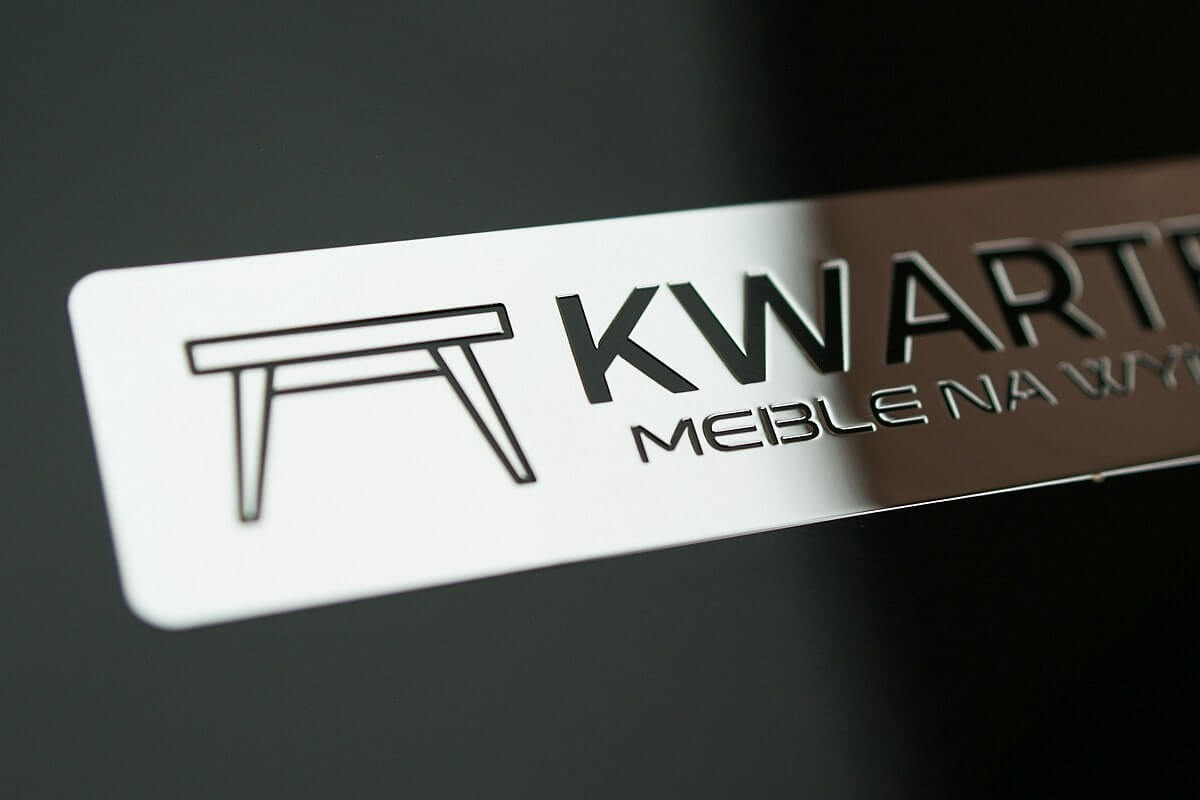
First impression and the aesthetics of the logo (a visual face-off across industries)
When we look at a product, our eyes subconsciously hunt for something to latch on to — the logo. Three-dimensional 3D stickers, also known as gel stickers, are the choice for brands that want to be associated with modernity and dynamism. Thanks to the transparent polyurethane coating, the colours underneath become more saturated, and the depth effect draws the eye to the printed artwork. It’s a bit as if the logo were submerged beneath a glass lens.
Metal emblems, on the other hand, are a byword for prestige. There’s no room for compromise here. Raw elegance, brushed textures, matte finishes or high gloss — all of it builds the image of a premium brand. Metal carries its weight, symbolically as well as physically. If your product is going to sit on a shelf alongside luxury goods, a metal detail will be the natural choice. It’s worth asking yourself the key question: are you aiming for cutting-edge technology, or for years of tradition and solidity?
Domed stickers – increase brand visibility!
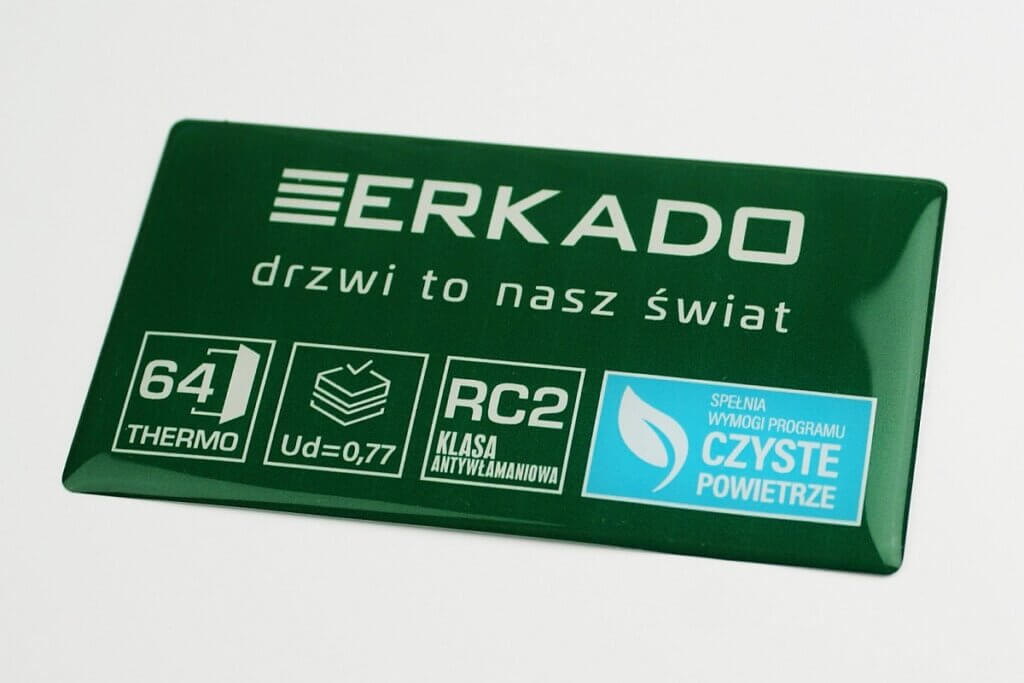
Technical analysis and the durability of resin-coated logo stickers
Aesthetics are one thing, but the product has to stand the test of time and tough conditions. When pitted against UV rays, moisture or extreme temperatures, both solutions cope surprisingly well, though in different ways. The polyurethane in resin-coated 3D stickers is flexible. Interestingly, it has a “self-healing” quality — minor dents straighten themselves out over time. However, it’s metal that is king when it comes to mechanical toughness. It’s difficult to scratch and virtually impossible to damage with an accidental knock.
The question of the substrate also comes into play. Domed labels come out on top where the surface is slightly curved. Although we also put them on flat surfaces, they have a flexibility that — within a small range — helps them conform to gentle arcs. Metal is rigid and uncompromising — it’s at its best on perfectly flat, hard components. If you try to stick rigid metal onto a curved housing, the edges may start to lift, which will ruin the whole effect.
When it comes to fitting, 3D stickers rely on strong self-adhesive films and membranes. It’s a quick and clean solution. Metal gives us more room to manoeuvre: from industrial adhesives, through double-sided tapes, all the way to rivets or screws, which can in themselves serve as a decorative element.
What is the minimum production budget? You can print stickers with us starting from 150 EUR net.
The economic angle (budget versus production scale)
I won’t try to hide it — price often plays the leading role in the decision-making process. 3D labels produced with polyurethane technology are usually a much cheaper alternative, particularly for medium and large print runs. Their production process is quicker and less complex than metal machining.
The next point is minimum order quantities. Ordering 50 metal emblems with a company logo can prove costly because of the need to prepare dies or moulds. With 3D technology, the barrier to entry is lower, which makes it ideal for smaller product series. Remember personalisation, too. With 3D technology, you can print any artwork in the full CMYK palette. Metal often limits us to the colours of the metal itself, to engraving or to applying enamel — which, with intricate, multicoloured logos, can be both troublesome and costly.
Applications in practice: printed 3D stickers and metal emblems
Where do these solutions come into their own? In the automotive industry, metal emblems reign supreme on boot lids, bringing the make of the car to the fore. However, on the alloy wheels or inside the cabin, you’ll more often come across 3D logo stickers, which are resistant to chemicals and easier to replace.
Consumer electronics and white goods are another proving ground. The logos on laptop casings or modern coffee machines often rely on the three-dimensional 3D effect to play up their “high-tech” character. Furniture and interior design, broadly speaking, are metal’s kingdom. A subtle brass plaque on the side of an elegant wooden dresser lends it a class that no plastic is capable of imitating.
Comparison table — the advantages of 3D domed stickers and metal emblems side by side
For those who like facts, I’ve put together a rundown of the most important features:
| Feature | 3D Stickers (Resin-coated) | Metal Emblems |
| Prestige | Medium / Modern | Very high |
| Colour palette | Full CMYK palette | Limited (mainly the colours of the metal) |
| Price | Low / Medium | High |
| Mechanical resistance | Good (self-healing resin) | Very high |
| Surface shape | Flat and gently curved | Flat only |
Which type of sticker to go for? The 3D effect, or the gleam of metal?
The final decision is yours to make, but I think after reading the points above, the picture has become clearer. If you’re pushed for time, you need the full printed colour gamut and you want to keep costs in check, resin-coated promotional stickers will be a bullseye. They’re a superb, modern way to brand, and for years now they haven’t let anyone down where aesthetics are concerned. Resin-coated stickers more often play the role of promotional giveaways and advertising stickers. Their marketing use in shaping a company’s image sets them apart and points to their origins in a production process closely tied to the printing industry and print techniques.
It’s worth remembering that bespoke resin-coated stickers stand out from classic stickers printed only on self-adhesive film because they’re highly resistant to mechanical damage and to UV rays.
If, however, you’re building a product for the long haul — one that’s meant to bring to mind the top shelf and an industry leader — plump for metal. It’s an investment in brand image that pays dividends every time the customer picks up the product. Metal is something more than a logo — it’s a promise of quality. Where the quality of the final product is paramount, it’s definitely worth investing in metal stickers and emblems.