Chemical labels and pictograms for chemical products
Substances that may pose a threat to health or life must be appropriately labelled. The pictograms we see on chemical labels inform users about potential dangers and can protect them from many accidents. Correct labelling of chemical substances can raise standards of Occupational Health and Safety in many areas, for example, the use of appropriate personal protective equipment.

The main purpose of using hazard labels
The main purpose of displaying GHS (Globally Harmonised System of Classification and Labelling of Chemicals) pictograms on products is to ensure user safety by providing information on potential physical and environmental hazards associated with chemicals. The main purposes of displaying GHS pictograms are as follows:
- Danger warning. GHS pictograms are used to warn users about the potential hazards associated with specific chemical products. They help you quickly identify and understand the type of hazard, allowing you to take appropriate precautions.
- Raising awareness. GHS pictograms are intended to increase user awareness of the potential hazards associated with chemical products. They enable quick recognition of the type of hazard, even for those unfamiliar with detailed chemical information.
- Ensuring uniform classification and GHS pictograms are part of the global system for classifying and labelling chemicals. They are designed to ensure consistency in classification and hazard communication worldwide. This enables people using chemical products in various countries to easily understand and compare label information.
- Improving safety is the main goal: GHS pictograms aim to enhance user safety. Providing clear and easily understandable information about potential threats enables you to take appropriate precautions, minimising the risk of dangerous situations.
- Facilitating the exchange of information– GHS pictograms facilitate the exchange of information on the hazards of chemical substances throughout the supply chain. With a uniform classification and labelling system, manufacturers, sellers and users can communicate effectively and provide important safety information.
Pictograms in the Globally Harmonised System (GHS) are an important information tool that helps protect the health and safety of users of chemical products. Today, we will focus on the most important markings for hazardous chemicals.
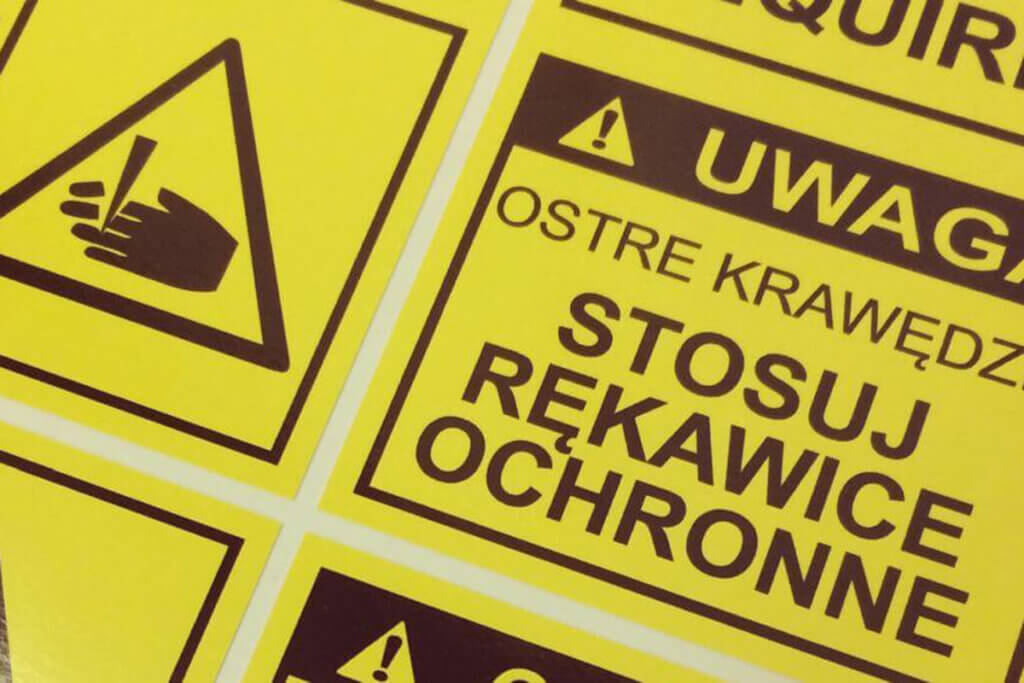
Chemical Labels – What Are They?
Chemical labels, commonly known as labels for chemical substances, are markings that are affixed to the packaging of products containing hazardous chemical substances. They warn the user about the danger and health hazards – so they should be legible and understandable to everyone.
Depending on the type of threat, they are used to indicate the type of hazard and contain phrases that provide precautions when handling the hazardous substance.
Without proper labelling, goods are not approved for sale – otherwise, they may pose a threat to human life and health.
Each chemical label should include the name, expiration date, CAS number, and EC number of the substance, as well as the name of the manufacturer or distributor. It also includes hazard statements and precautions.
The label mustn’t be damaged during transport – otherwise it will no longer fulfil its role. Its workmanship and durability are therefore of great importance.
Pictograms on chemical labels
Pictograms warning against hazardous chemical compounds have a red border, a white background, and a black symbol. Having a characteristic shape – a square set on top.
Previously, they appeared as an orange square with a black border. The same pictogram – e.g. an exclamation mark – can indicate several different types of hazard. Chemical hazard pictograms are used to mark the packaging of chemically hazardous products.
Pictograms indicating the type of hazard.
The pictograms below are from the Globally Harmonised System of Classification and Labelling of hazardous chemicals. Their square shape, set on top, features a black symbol on a white background with a red border, allowing for easy recognition and understanding of information about the hazards associated with a given chemical product. The GHS system was introduced to the European Union in 2008 by the so-called CLP Regulation, Regulation (EC) No 1272/2008 of the European Parliament and of the Council of 16 December 2008 on classification, labelling and packaging of substances and mixtures.)
The CLP Regulation imposes on manufacturers, importers and downstream users of hazardous chemical substances and mixtures the obligation to classify, label and package them before placing them on the market. Classification in terms of hazards resulting from physicochemical properties, health hazards, and environmental hazards involves comparing these properties, obtained based on available information, with the criteria set out in the Regulation.
Examples of pictograms following the CLP/GHS regulation identifying different types of hazards.
Pictogram “Carcinogenic/mutagenic substances”

A black symbol of a human bust with a star-shaped spot spreading out to the sides, indicating harmful substances that may have a carcinogenic or mutagenic effect on the human body. It identifies various health hazards, including inhalation exposure, reproductive effects (germ cells), toxic effects on target organs, and others.
Pictogram “Exclamation mark”

The black exclamation mark symbol means that the product is irritating to the skin, eyes or respiratory tract. It may also indicate that the product is toxic.
Pictogram “Flame”
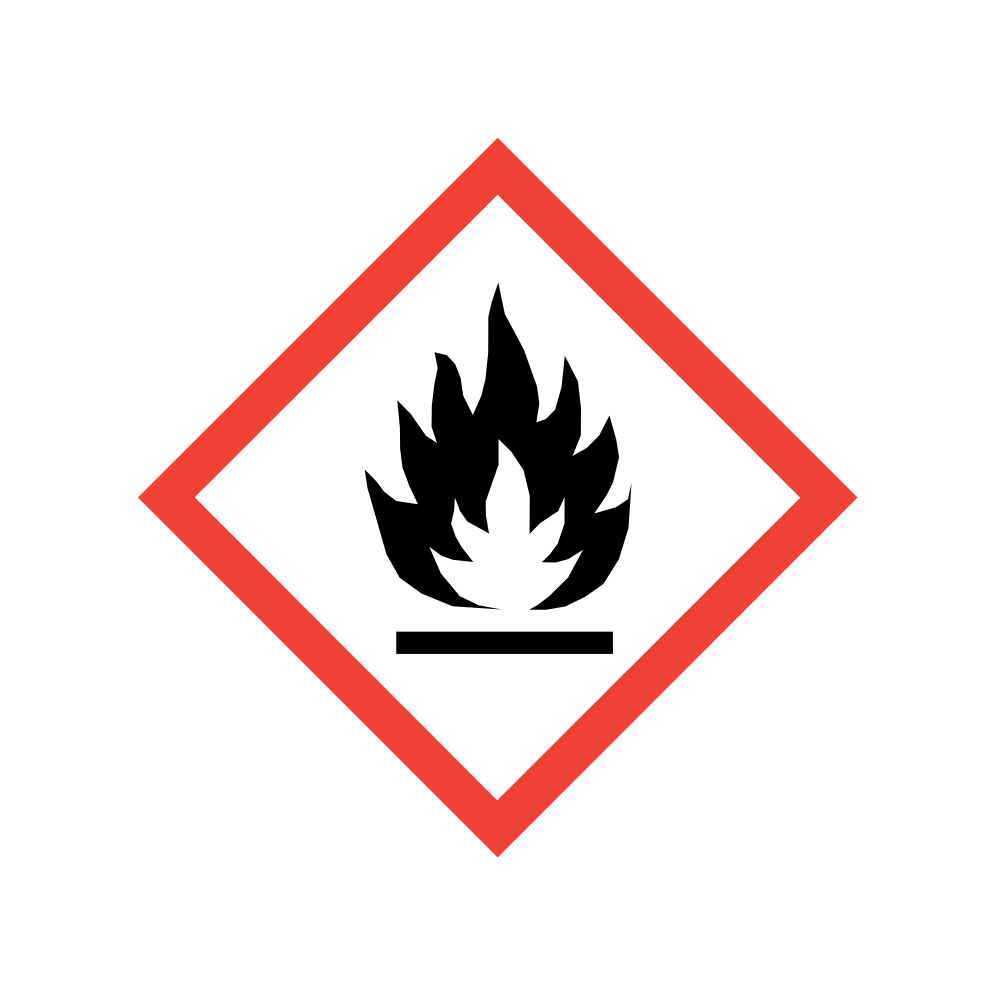
The flame pictogram means that the product is flammable and can cause a fire or explosion. In the case of combustible substances, it can also indicate their high ignition temperature. These can be, for example, flammable aerosols, flammable gases and other flammable substances.
“Gas cylinder” pictogram
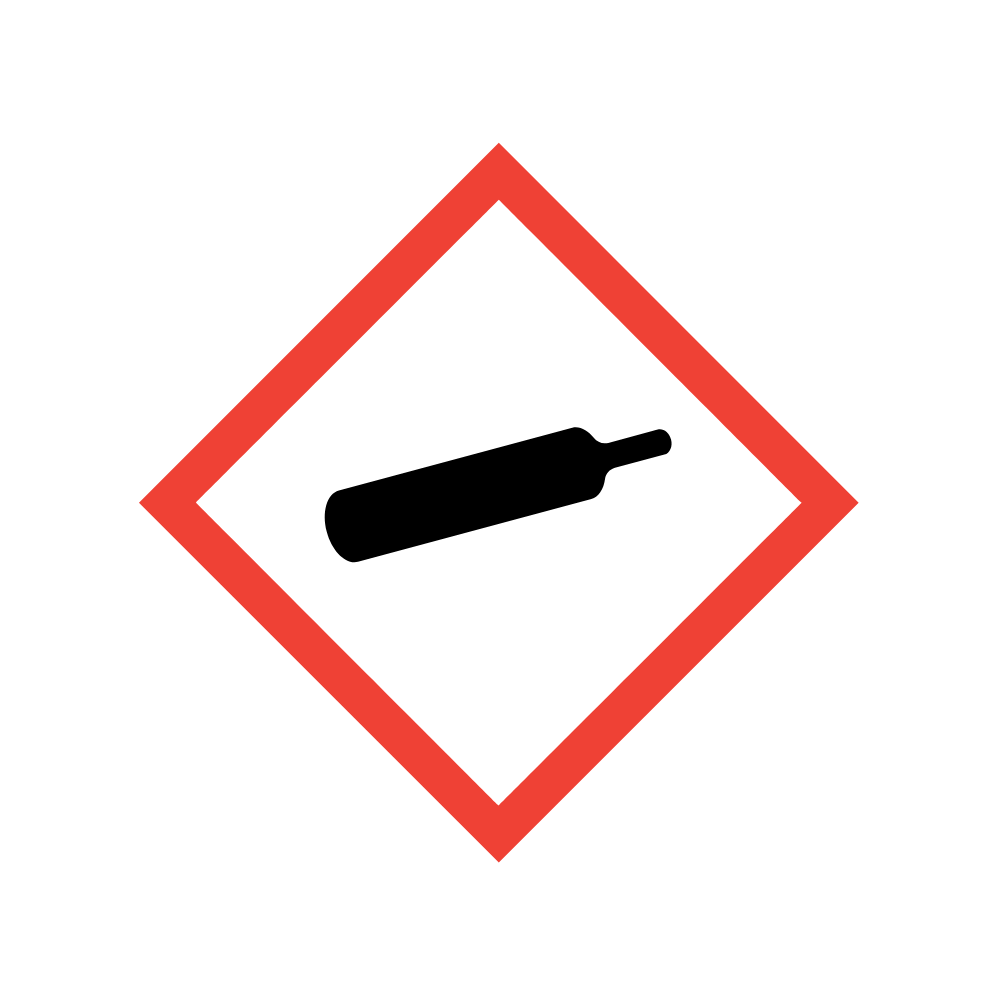
The gas cylinder pictogram indicates that the product is a compressed gas in a pressurised container. Gases under pressure are very dangerous. The marking indicates that an explosion may occur if the product is not handled properly.
“Skull” pictogram

The pictogram contains a black skull symbol with crossbones underneath. It is used to mark toxic substances. A product marked in this way may have a strong toxic effect and may cause serious health damage or death if ingested, inhaled or in contact with skin.
“Environmentally hazardous” pictogram
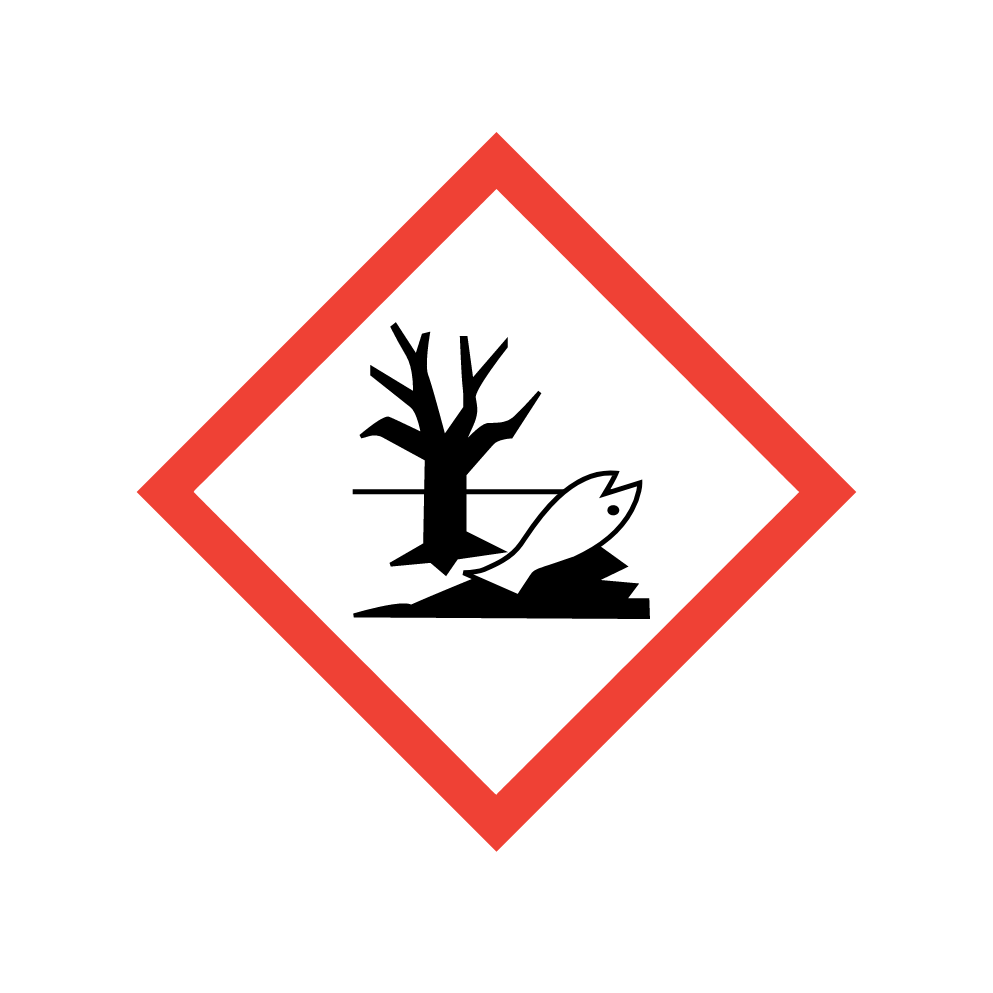
The pictogram of a tree with roots and a poisoned fish symbol indicates that the product hurts the natural environment, such as soil, water (hazard to the aquatic environment) or living organisms.
The classification includes more pictograms, such as those for explosives, corrosive substances, oxidising gases, substances corrosive to metals, and others.
For more pictograms and additional information on their use, please follow this Wikipedia link https://pl.wikipedia.org/wiki/Piktogramy_okre%C5%9Blaj%C4%85ce_rodzaj_zagro%C5%BCenia.
Chemical labels
Custom-made chemical labels are a key component of the POLINAL offering. We print them as self-adhesive labels supplied on a roll. Polinal produces various types of stickers, including warning stickers and chemical labels featuring pictograms, as well as a comprehensive range of products for branding, advertising, and marking.
We create labels taking into account individual customer needs and a jointly prepared project. Thanks to the use of full-colour printing, the effectiveness and readability of markings are even greater. If you require a larger quantity of protective labels with pictograms, please contact us.
Chemical Label Production
Custom-made chemical labels are a key component of POLINAL’s offerings. We print them as self-adhesive labels supplied on a roll.
We create labels taking into account individual customer needs and a jointly prepared project. Thanks to the use of full-colour printing, the effectiveness and readability of markings are even greater. If you require a larger quantity of protective labels with pictograms, please get in touch with us.
Image Source: https://unece.org/transport/dangerous-goods/ghs-pictograms
FAQ – Frequently Asked Questions
-
Who is responsible for proper labeling of chemical products?
Responsibility for product labelling is shared between different parties. The manufacturer is responsible for ensuring proper labeling and providing accurate information in compliance with legal requirements. The seller must ensure that labels comply with regulations and do not mislead. Additionally, supervisory authorities, such as Trade Inspection, monitor label compliance with applicable regulations.
-
What does the pictogram with skull and crossbones mean?
The pictogram with skull and crossbones indicates toxic substances with strong effects. A product marked this way can cause serious health damage or death if ingested, inhaled, or comes into contact with skin. This is one of the most serious warning symbols used in marking dangerous chemical substances.
-
What information must be included on a chemical substance label?
Every chemical substance label should include the product name, expiry date, CAS and EC number of the substance, and manufacturer or distributor details. The label must also contain appropriate pictograms indicating the type of hazard and phrases indicating safety precautions when handling the dangerous substance. Without proper labeling, the product cannot be approved for sale.
-
What are chemical pictograms and what do they used for?
Chemical pictograms are graphic symbols used to identify and warn against various types of hazards associated with chemical substances. They have a characteristic diamond shape with a black symbol on a white background and red border. They are part of the globally harmonized classification system GHS and serve to ensure user safety by providing clear information about potential hazards.