Monomeric film. What Is Monomeric Vinyl Film?
Monomeric film, also known as monomer film, is a type of digital printing material commonly used for short-term promotional graphics and signage, offering vibrant colours and high-quality prints. The cheapest self-adhesive film, which is a monomeric film, stands out mainly for its price and ease of application, making it an economical choice for both outdoor and indoor advertising. What distinguishes it from other types of materials intended for production in the advertising industry, and what is its most common use?
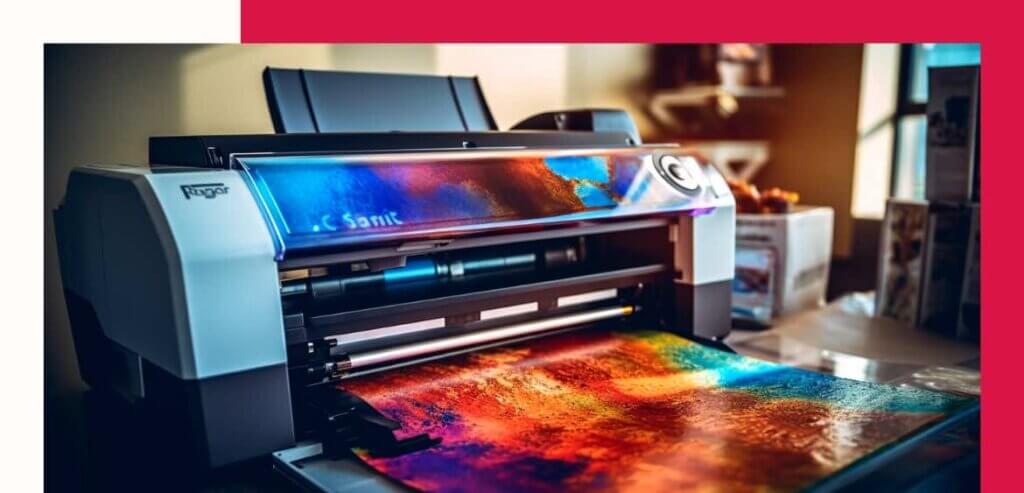
What is monomeric vinyl film?
Monomer foil is a basic self-adhesive foil designed for indoor and outdoor advertising materials. It consists of three elements: a PVC foil layer, acrylic glue, and the whole is connected to a layer of one-sided, siliconised paper – a protective layer that secures the glue.
It is used in large-format printing, primarily for short- and medium-term advertisements, although monomer films are also available for long-term production. It is due to its durability of 3-5 years; after that time, it is worth replacing the advertisement with a new one.
It is available in two basic versions – colourless and white. The right choice of finish – matt, semi-gloss, gloss, satin or mirror effect – allows you to achieve the desired final effect. Matte in particular finds many applications in advertising premium brand products.
The grammage of monomers is usually 80-100 microns, and the thickness is 80 μm. It is widely used on flat surfaces. Depending on the manufacturer, it may have paper backings of different grammages. Thicker backing paper sometimes makes application easier. The paper is siliconised on one side, making it easy to peel off the foil.
The thinness of the adhesive film (glue layer) makes it easier to peel off and remove this type of advertising print over time. Monomer foils are also suitable for producing double-sided displays.
Applications Of Monomeric Film
Monomer film is designed for use on flat, rigid surfaces that are free from grooves, protrusions, and complex structures. With great care, it can be used on slightly curved surfaces.
Polymer or cast foils are already used to advertise products and services on irregular surfaces full of recesses and convex elements. Polymer foil is much more flexible, making it suitable for applications on slightly uneven surfaces. It is also resistant to external conditions, including UV radiation, and durable in medium-term applications. It is usually applied to dimensionally stable furniture, glass, walls, PVC plates or mirrors.
Monomeric films are one of the most commonly used materials for corporate plotter foil stickers, printing billboards, advertisements on shop windows or company cars. Displays covered with such foil often decorate stands at trade fairs and industry events.
Depending on the type of adhesive and backing, these materials are short-term. They are suitable for many applications in traditional promotional activities. Designed for use on undemanding surfaces, they typically feature an acrylic adhesive. An industry curiosity is also adhesive foils, which do not have any adhesive at all.
Advantages And Disadvantages Of Self-Adhesive Monomeric Foil
One of the greatest advantages of this material is its low price. It is the cheapest material among those available on the market.
This type of printing film can be easily cut to any shape and size using a plotter, creating exactly the kind of advertisement you want. Importantly, cutting is possible both before and after printing. Its application itself is also easy, as long as we are dealing with even surfaces. Different types of film, such as monomer films, have their specific applications and benefits that are worth considering.
A big advantage of self-adhesive monomeric PVC foil is also its average strength and resistance to various weather conditions. Outdoor advertisements made in this way also have protection in the form of monomer laminate, which protects the print. It provides additional protection for the print against the harmful effects of sunlight, including UV radiation, which can cause loss of colour. It also increases the resistance of the place of exposure to mechanical damage. These also provide excellent protection for the print against environmental moisture.
Main Applications of Monomeric Films.
Monomeric film is widely used, primarily in the advertising industry. It is often used for:
- production of self-adhesive stickers and labels that are easy to apply to various surfaces,
- creating window graphics and signs while offering the possibility of easy removal without leaving any traces,
- making banners and advertising boards that are exposed to external factors,
- decorating advertising vehicles (flat panels), where the foil must be resistant to changing weather conditions and speed,
Due to its properties, monomeric film is an indispensable material in the advertising industry. Monomeric films are designed for short- to mid-term use. Without proper lamination and surface prep, they degrade faster and may shrink or crack. An additional advantage is the low price of monomeric film compared to other types of film.
Monomeric Foil Application?
Monomeric foils should be glued onto a completely clean surface. Monomeric foils should also not be applied to freshly painted surfaces.
We can distinguish two application methods:
- wet application
- dry application.
They are used interchangeably in both traditional outdoor and indoor advertising.
The wet application of monomeric foil is used much more frequently. The primary factor is the ease of damp application; dry application can be somewhat more troublesome and time-consuming. In wet applications, it is easier to eliminate air bubbles.
Monomer films are mainly used for application on smooth and flat surfaces. Popular brands of high-quality monomer films on the market, which are used by many printing houses, include Oracal, Orafol, and Avery. It can be used for solvent, latex, and aqueous inks. Additionally, products with ‘UV’ have improved adhesion for digital prints (UV type).
Difference Between Monomeric and Polymeric Vinyl Film.
Monomeric calendered vinyl and polymeric vinyl films are two types of PVC (polyvinyl chloride) films used in signage, graphics, and surface decoration. The primary difference lies in the plasticisers used and the resulting film performance and durability. Both are calendered vinyl film.
Cast Vinyl Films vs Monomeric Films
Cast Film and Monomeric Film – What are the Differences Between Them? Cast films are more flexible than monomers. More stretchable and plastic. They are suitable for various applications, including the advertising industry.
It is used to change the colour of vehicles that have many embossments and is used to wrap car bodies. It should also be remembered that cast foil has a lower thickness and a different type of adhesion and glue.
Summary
Monomeric films are a popular choice among printers due to their high quality and ability to be printed using a variety of methods, such as solvent, UV, and screen printing. rands such as Oracal, Orafol, and Avery offer a wide selection of these films.
When comparing monomeric films with cast films, it is worth noting their differences. ast films are characterised by greater flexibility and plasticity, which makes them better suited for applications requiring high stretchability, such as changing the colour of vehicles or wrapping car bodies.
-
Is monomeric film suitable for car wrapping?
Due to its properties, monomeric film is not recommended for vehicle wrapping. Its limited flexibility and shorter lifespan make applying the complex shapes and curves typical of vehicle bodywork difficult.
Furthermore, the speed at which materials degrade due to weather factors—such as UV radiation, moisture, or temperature changes—can lead to rapid fading, cracking, or detachment of the film from the car’s surface. Therefore, it is recommended to use polymer film for vehicle wrapping, as its durability and flexibility make it significantly more effective for this purpose.
-
What is the difference between monomeric film and polymeric film?
The monomeric film differs from polymeric film primarily in its chemical composition and properties, which affect its range of applications. The monomeric film, produced from monomers, is less flexible than polymeric film and has a shorter lifespan, which usually limits its use to indoor applications or short-term outdoor use.
On the other hand, polymeric film, composed of longer chains of polymer molecules, is characterised by greater durability and flexibility, making it suitable for more demanding outdoor applications. This is particularly important when wrapping surfaces with irregular shapes or producing graphics exposed to weather conditions for extended periods.