COSHH Hazard Symbols: A Guide to HSE Labels & Hazard Meaning
We all know chemical substances that pose a threat to people and the environment aren’t just found in big factories. They’re everywhere—in business, industry, and even at home. That’s why warning labels are absolutely vital for identifying and communicating the risks these substances carry. Proper labelling, which follows the rules for marking dangerous substances, is essential; it genuinely protects us from danger.

You can think of the relationship between the Globally Harmonised System (GHS) and COSHH symbols (Control of Substances Hazardous to Health) in a simple way. GHS is the system that gives us the information—the classification and the labels. COSHH regulations, is the UK law that then tells employers what to do with that information, specifically mandating actions like risk assessment and control.
GHS provides the universal language of symbols and Safety Data Sheets (SDS). COSHH, on the other hand, is all about how employers use that language in the workplace to protect their staff—by creating risk assessments and control measures.
| Feature | GHS (Globally Harmonised System) | COSHH (Control of Substances Hazardous to Health Regulations 2002 – UK) |
| Objective | Hazard Communication: To make classifying and labelling chemicals the same across the globe. | Risk Control: To safeguard employees (and others) from risks linked to hazardous substances at work. |
| What it Defines | Hazard: Defines what the substance is (e.g., highly flammable, toxic) and how it’s classified. | Risk: Defines the actions an employer must take to prevent or control exposure to the substance. |
| Legal Status | An international standard or framework, put into UK law via the CLP Regulation. | UK Law (Statutory Instrument) that employers are legally required to follow. |
| Area of Focus | The Product (how it’s identified and sold). | The Workplace (how the product is used, stored, and handled). |
The Key Relationship:
The most basic COSHH rule is carrying out a risk assessment. The most critical document for that assessment is the Safety Data Sheet (SDS), which is a mandatory part of the GHS/CLP framework.
- GHS tells you the danger. (e.g., The Skull and Crossbones pictogram shows something is highly toxic).
- COSHH tells you what to do about it. (e.g., Control the risk by using a fume cupboard and wearing gloves).
Legal Basis for Chemical Hazard Labelling
To properly regulate how chemicals are classified and labelled, the UN created the Globally Harmonised System of Classification and Labelling (GHS). This system gives us the necessary information and warnings on hazard classification.
Since 2009, the European Union has approved the GHS. It was introduced by the CLP Regulation (Classification, Labelling, and Packaging). This regulation sets the rules for:
- Classifying substances and mixtures based on the hazards they pose to people and the environment.
- The mandatory requirements for informing people about danger, using warning stickers and Safety Data Sheets (SDS).
- The compulsory conditions for the labelling and packaging of hazardous substances and their mixtures throughout the EU.

In the world of classifying and labelling hazardous chemical substances, you must use pictograms and other warning signs to identify different hazard classes, alongside providing precautionary statements and hazard statements. The CLP covers guidelines for creating product labels, how to place them on packaging, and even regulates the use of alternative chemical names to help substances move through the supply chain properly.

Promotional stickers – connect with the client
Classification of Dangerous Chemical Substances (GHS)
The GHS system classifies dangerous chemical substances according to the threats they pose upon contact. They fall into a few main categories:
- Physical Hazards: Think about things like explosives, flammable liquids or gases, oxidising gases, and substances that are corrosive to metals.
- Health Hazards: This includes substances with acute toxicity, those that are toxic, can cause cancer (carcinogenic effects), irritate the skin, or cause respiratory sensitisation.
- Environmental Hazards: These are substances that pose a hazard to the aquatic environment.
There’s also an extra EU hazard class for chemicals that are dangerous to the ozone layer.


Rules for Creating Chemical Labelling
If you’re a manufacturer, distributor, or importer, you are responsible for ensuring hazardous chemicals have the correct labels. The label must be prepared before the product goes into circulation.
Crucially, chemical labels must follow the GHS and CLP requirements to keep users safe. This rule applies to both individual chemicals included in the GHS and mixtures of those substances. Also, remember: the labelling must be in the official language of the country where the product is sold.
Warning pictograms are a must-have element. Since they are based on the GHS, they’re universal and easy to read. This really helps protect health and makes handling chemicals easier. These pictograms have a clear design: a black symbol on a white background, bordered in red.
Legibility is critical. The labels must be universally understandable; otherwise, the substance still presents a significant risk. The elements must stand out against the background, and the signs must be large enough for the information to be easily read.

What must be on a label?
If a chemical threatens human health or the environment, the label needs to include:
- Hazard statements, precautionary statements, and other data required by the CLP regulation.
- Chemical pictograms indicate the type of hazard.
- The supplier’s name, address, and telephone number.
- The product identifier.
- A warning word—either “Caution” (for Toxicity Cat. 4) or “Danger” (for Toxicity Cat. 1-3). Just remember, you should only have one warning word.
Types of Chemical Substance Labelling
To clearly mark hazardous chemical substances, you’ll see a few different types of labelling used:
CLP/GHS Compliant Pictograms
These are the graphic warning signs whose goal is to clearly and simply show the dangers associated with specific products.
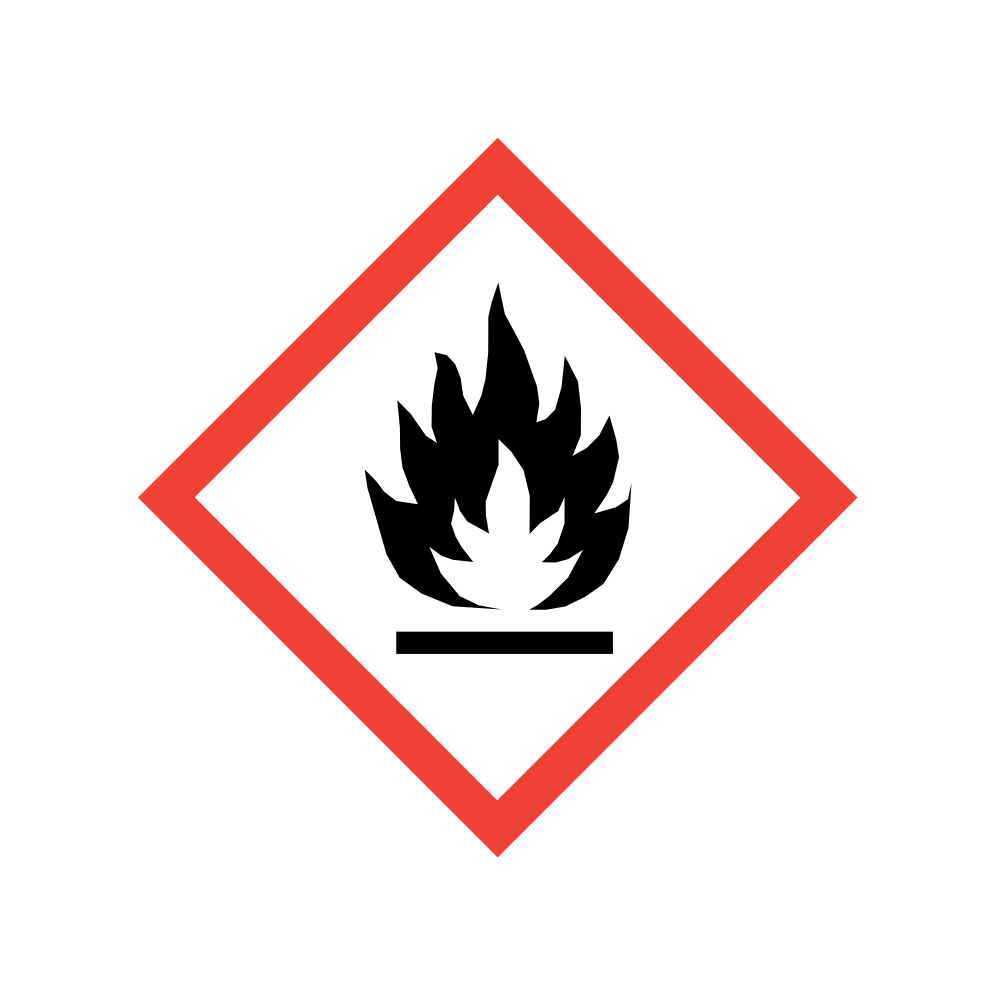
- For example, a pictogram with a fire symbol means flammable substances.
- A skull symbol indicates a highly toxic substance.
- An exclamation mark means the substance is an irritant.
- The standard design is a white inverted diamond with a red border. You’ll find these on adhesives, cleaning agents, and plant protection products.


Safety Signs with an Additional Description
These give the user even more precise details about the hazards.
- Another is a sign warning about asbestos-containing waste.
- One example is an orange square with a black frame and an ‘X’ and the words “Irritant substance”.

Dome 3D stickers – make your brand stand out!
Statements and Phrases (H, EUH, and P)
These determine the level of hazard and tell you what to do if you come into contact with the substance.
- H-statements describe the nature and intensity of the hazard using a four-digit code.
- P-statements give specific, concrete precautionary measures to limit the risk.
- EUH statements cover hazards that the GHS system doesn’t currently address.
Speaking for POLINAL®, we don’t just create custom stickers; we also make labels for marking chemicals and other hazardous substances. These labels give a clear warning about the risks and inform the user how to apply the product while meeting health and safety (OHS) requirements. We ensure our labels are highly durable, damage-resistant, and printed in vivid colours so they remain legible. This way, users are aware of the hazard, and the manufacturer has protection against potential claims.